

Colorectal Cancer Screening Guideline Update – May 30, 2018
On May 30, 2018, the American Cancer Society released a new colorectal cancer screening guideline, published in CA: A Cancer Journal for Clinicians. The new guideline recommends that adults at average risk for colorectal cancer start regular screening at age 45. The guideline was changed, based in part, on new data showing rates of colorectal cancer are increasing in younger populations. As a result, the American Cancer Society updated the guideline to save more lives by finding colorectal cancer early, when treatment is more likely to be successful and by detecting and removing polyps, which contributes to the prevention of colorectal cancer.
This webinar assists NCCRT members and 80% partners by answering common questions, reviewing the evidence-base behind the guideline, and discussing how it will apply in a clinical setting.
Speakers:
- Rich Wender, MD, Chief Cancer Control Officer, ACS, National Colorectal Cancer Roundtable (NCCRT) Chair
- Robert Smith, PhD, VP, Cancer Screening, ACS, NCCRT Co-Chair
- Durado Brooks, MD, MPH, VP of Cancer Control Interventions, NCCRT Steering Committee/Co-Chair Community Health Center Task Group
- Caroline Powers, Federal Affairs Director, ACS CAN
Additional Resources:
- Video message from Dr. Richard Wender
- Issue Brief and FAQ for NCCRT Members and 80% Pledger Signers
- ACS Press Release
Explore More
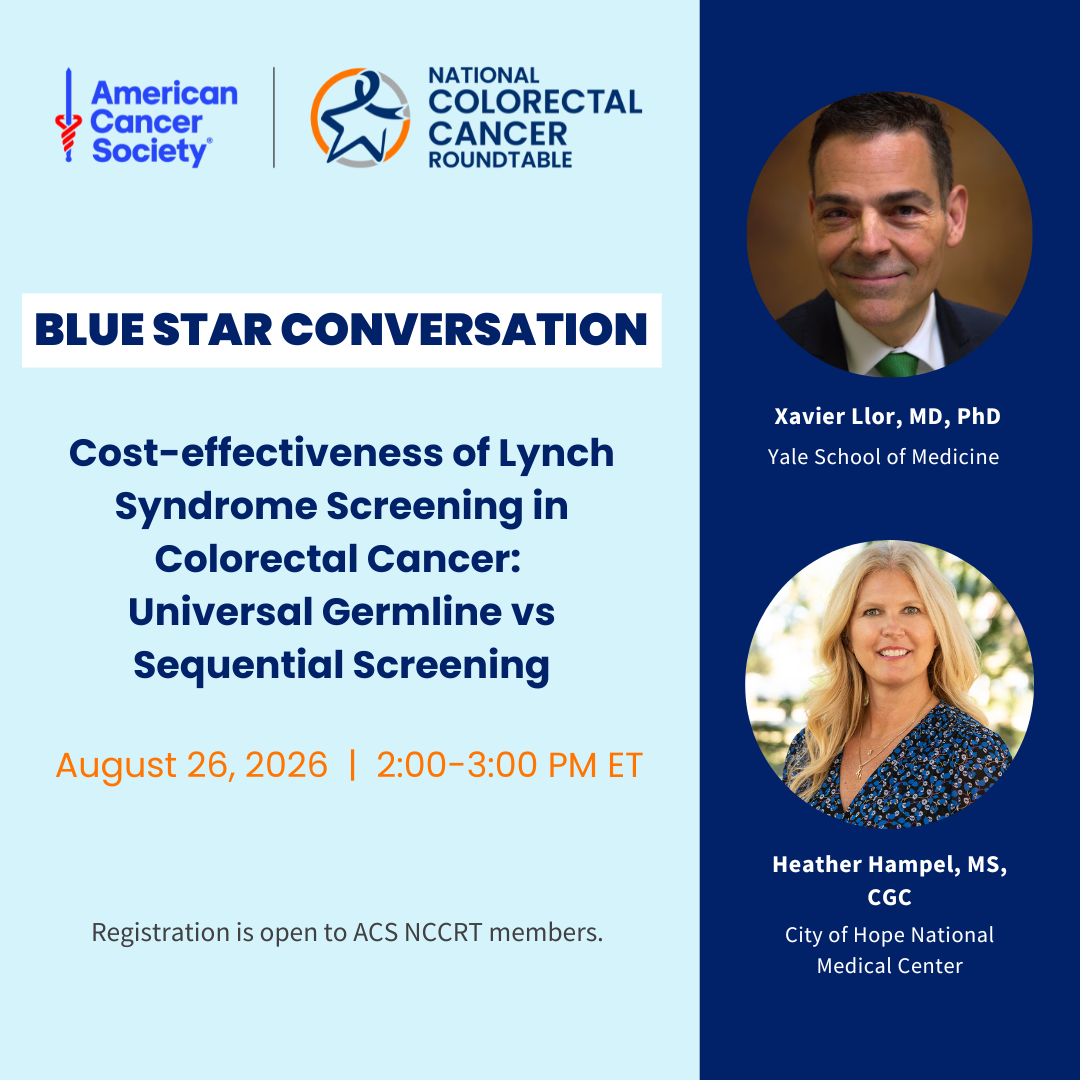
Blue Star Conversation: August 27, 2026
This Blue Star Conversation explored how expanded Lynch syndrome screening, including universal germline testing, could improve outcomes, increase testing rates, and identify more individuals with Lynch syndrome.
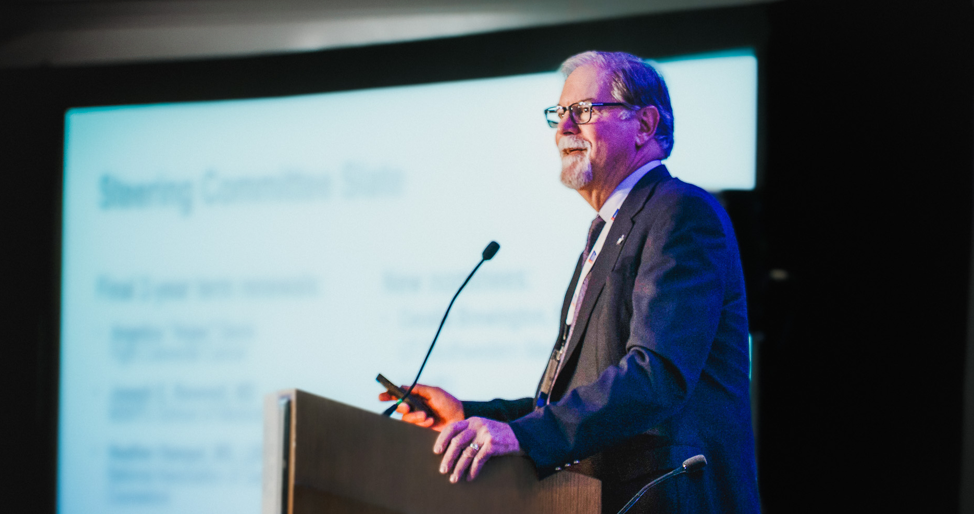
Webinar: Inside the New ACS Colorectal Cancer Screening Guidelines
This webinar provides an in-depth overview of the newly updated ACS CRC screening guidelines and the evidence supporting them, offering clarity on what these changes mean for screening and early detection.

Increasing Colorectal Cancer Screening in Rural Communities: A Practical Guide
This guidebook is designed to support key community partners in understanding and overcoming the unique challenges and common barriers to CRC screening faced in rural communities.