
Advanced Colorectal Polyp Brief
Disclaimer: The contents of this resource may not reflect the ACS Colorectal Cancer Screening Guidelines, updated May 27, 2026.
The National Colorectal Cancer Roundtable created the Advanced Colorectal Polyp GI Brief to help endoscopists and primary care clinicians identify patients with advanced colorectal polyps, understand the epidemiology and associated risk factors, and most importantly know the risks of colorectal neoplasia for patients with advanced colorectal polyps and their first-degree relatives (parents, siblings, children).
This brief aims to:
- Remind endoscopists that patients with an advanced colorectal polyp and their close relatives are at increased risk for advanced colorectal polyps and colorectal cancer;
- Keep endoscopists up to date with current guidelines; and,
- Provide template letters to communicate colonoscopy and pathology results, risk status, and follow-up recommendations for patients and close relatives.
Supplemental template letters:
- Advanced colorectal polyp letter
- Non-advanced colorectal polyps letter
- Hyperplastic and other Non-neoplastic letter
Learn more on how gastroenterologists and endoscopists can play a role in the national efforts to improve colorectal cancer screening rates:
Explore More
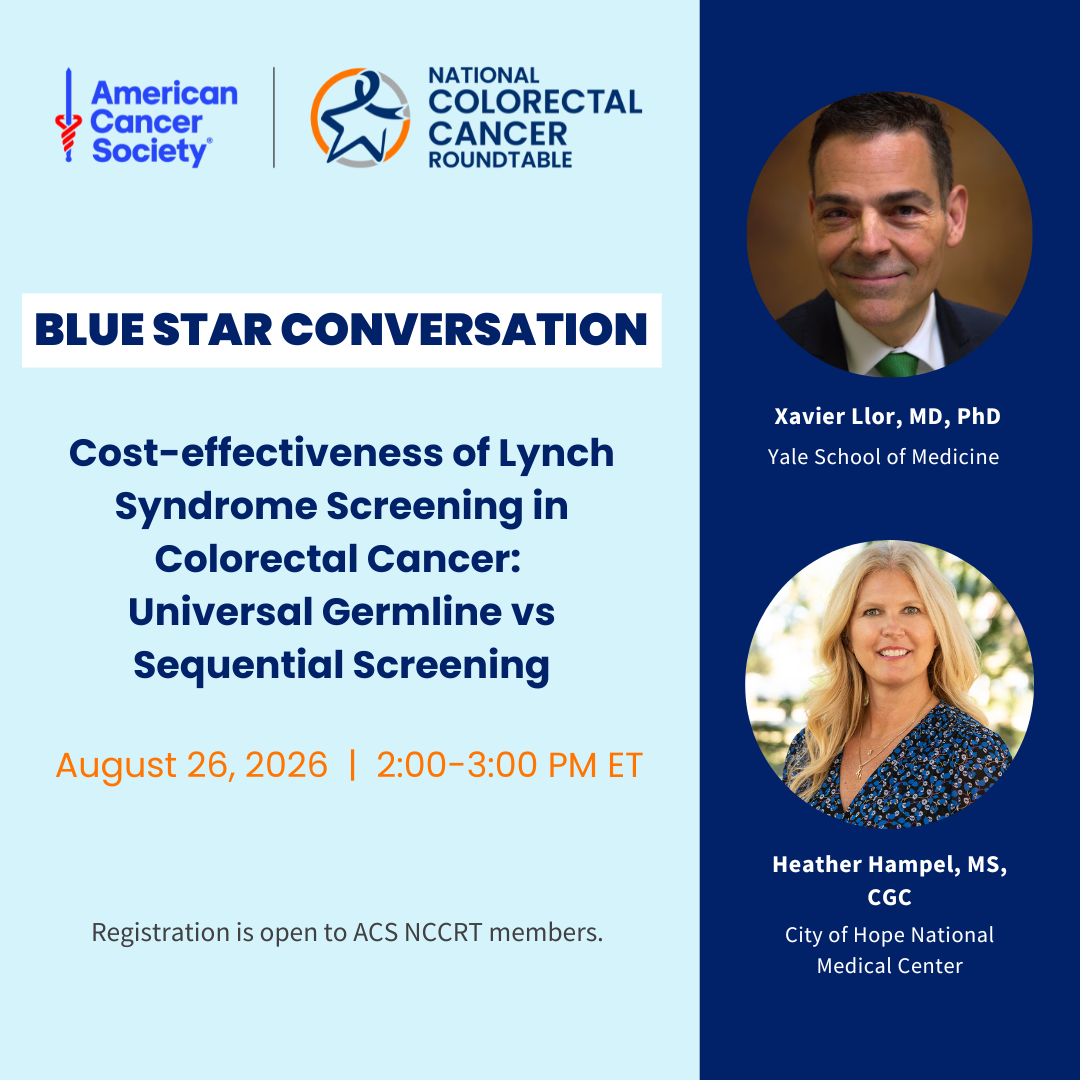
Blue Star Conversation: August 27, 2026
This Blue Star Conversation explored how expanded Lynch syndrome screening, including universal germline testing, could improve outcomes, increase testing rates, and identify more individuals with Lynch syndrome.

Webinar: Inside the New ACS Colorectal Cancer Screening Guidelines
This webinar provides an in-depth overview of the newly updated ACS CRC screening guidelines and the evidence supporting them, offering clarity on what these changes mean for screening and early detection.

Increasing Colorectal Cancer Screening in Rural Communities: A Practical Guide
This guidebook is designed to support key community partners in understanding and overcoming the unique challenges and common barriers to CRC screening faced in rural communities.