
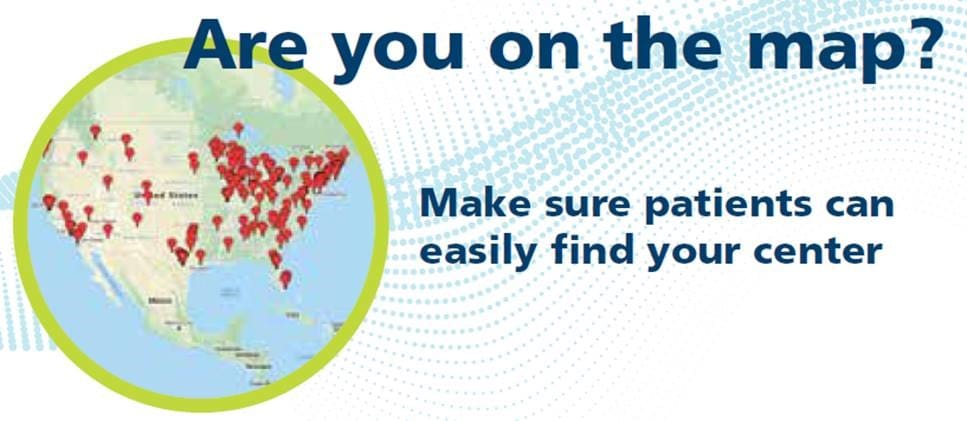
The American College of Radiology (ACR) is now offering the My CT Colonography Center online locator, a patient-friendly online tool to find a computed tomography (CT) colonography screening center near you. To date, there are 330+ centers registered for the locator tool. Virtual colonoscopy — or CT colonography (CTC) — is a safe, effective and minimally invasive imaging scan used to screen people for colorectal cancer. Early detection results in early treatment and a high cure rate. CTC, unlike stool-based colorectal cancer screening tests, is a preventive test because it can detect and treat precancerous polyps before they become cancerous.
To find a CT colonography screening location near you, simply enter your state, address or zip code at www.acr.org/myctc.
- You can also call your preferred radiology center and ask if they offer CT colonography as a screening test for colorectal cancer.
- The webpage also includes patient brochures on CTC, a video of a patient receiving a CTC, and more.
Evaluation: This tool was developed as a collaborative effort with Bracco Diagnostic and ACR CTC registry participants discussing a need to increase awareness of CTC screening option for patients.
Permissions: Made publicly available online by the American College of Radiology.
Publication date: March 2026
Post date: April 2026
Contact: Submit comments, questions, and suggestions [email protected].
Explore More
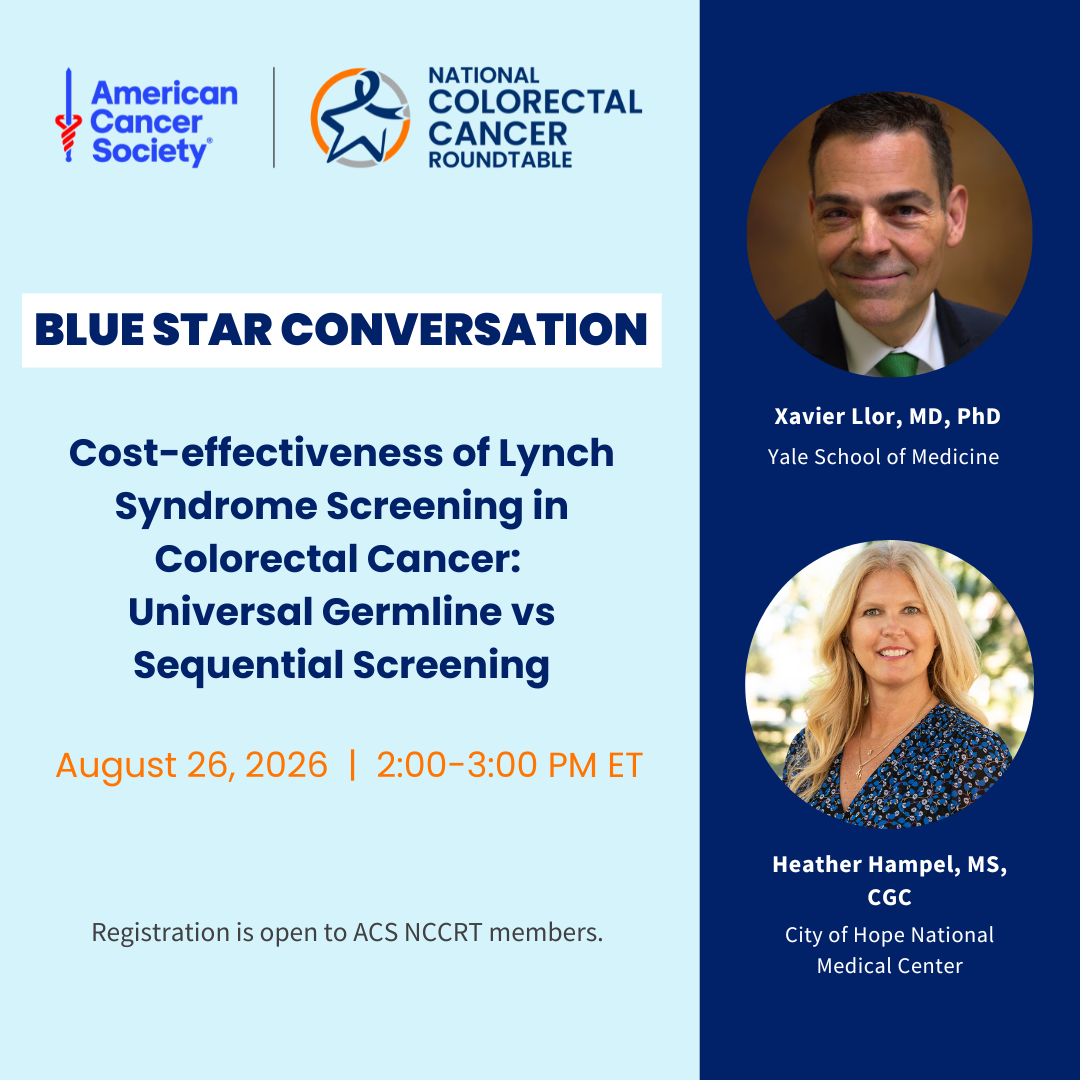
Blue Star Conversation: August 27, 2026
This Blue Star Conversation explored how expanded Lynch syndrome screening, including universal germline testing, could improve outcomes, increase testing rates, and identify more individuals with Lynch syndrome.

Webinar: Inside the New ACS Colorectal Cancer Screening Guidelines
This webinar provides an in-depth overview of the newly updated ACS CRC screening guidelines and the evidence supporting them, offering clarity on what these changes mean for screening and early detection.

Increasing Colorectal Cancer Screening in Rural Communities: A Practical Guide
This guidebook is designed to support key community partners in understanding and overcoming the unique challenges and common barriers to CRC screening faced in rural communities.