
Webinar: Colorectal Cancer Burden Shifting To Younger Individuals: A Close Look At What The Most Recent Data Tells Us About Colorectal Cancer Incidence, Mortality, And Screening Rates

Colorectal Cancer Burden Shifting To Younger Individuals: A Close Look At What The Most Recent Data Tells Us About Colorectal Cancer Incidence, Mortality, And Screening Rates – May 18, 2020
This webinar provided a close look at the findings from Colorectal Cancer Statistics 2020, a recent American Cancer Society publication released on March 5, 2020. According to the report, the burden of colorectal cancer is swiftly shifting to younger individuals as incidence increases in young adults and declines in older age groups. Additional report findings include the median age of diagnosis has dropped from age 72 in 2001-2002 to age 66 during 2015-2016 and half of all new diagnoses in people 66 or younger. The publication is accompanied by a consumer version, Colorectal Cancer Facts & Figures and a press release is also available. Learn about these findings and more in this webinar featuring report lead author Rebecca Siegel, MPH.
Speakers:
- Rebecca Siegel, MPH, Scientific Director, Surveillance Research, American Cancer Society, Inc.
- Robert Smith, PhD, Senior Vice President, Cancer Screening, American Cancer Society, Inc. (Moderator)
Explore More
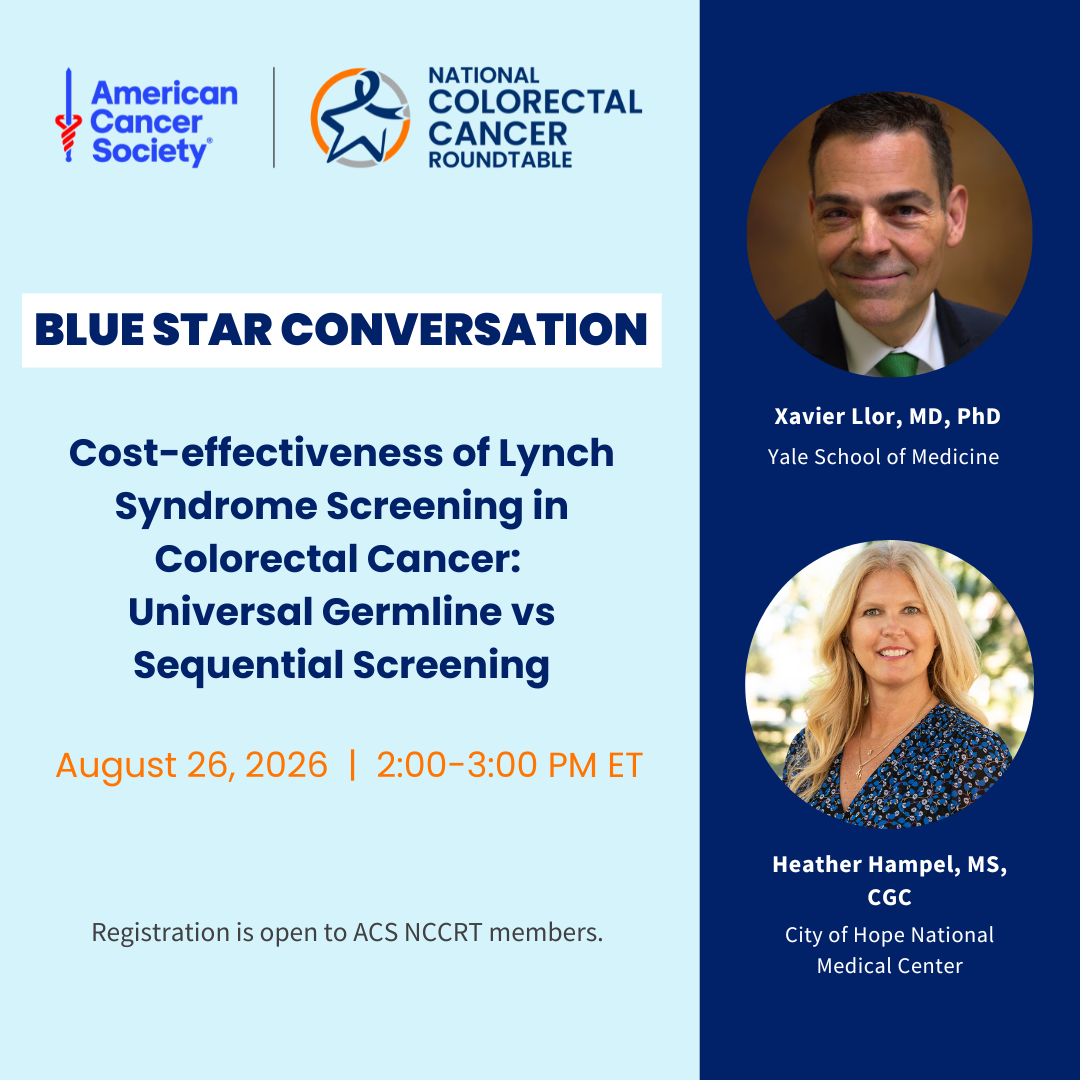
Blue Star Conversation: August 27, 2026
This Blue Star Conversation explored how expanded Lynch syndrome screening, including universal germline testing, could improve outcomes, increase testing rates, and identify more individuals with Lynch syndrome.
Webinar: Inside the New ACS Colorectal Cancer Screening Guidelines
This webinar provides an in-depth overview of the newly updated ACS CRC screening guidelines and the evidence supporting them, offering clarity on what these changes mean for screening and early detection.

Increasing Colorectal Cancer Screening in Rural Communities: A Practical Guide
This guidebook is designed to support key community partners in understanding and overcoming the unique challenges and common barriers to CRC screening faced in rural communities.