

2025 Pricing for Blue Star Pins and Silicone Bracelets
Roundtable members and partners can take advantage of group buying power by purchasing bulk orders of blue star pins and silicone bracelets through Pennington Promotion. Members can reach out to Mark Weiner at 201-833-8805 or [email protected] to order. More information can be found at this site.
Normal production time for pins only is about three weeks, with 7-10 additional days for a customized card. Orders for March 2025 may be delayed to mid-March. Please contact the vendor for current shipping estimates.
The prices listed below are for delivered cost.
Many other products can be produced with the Blue Star logo on it. Please inquire with the vendor to learn more.
Pins:
-
- 250 pcs./$.84 each
- 500 pcs./$.70 each
- 1000 pcs./$.68 each
- 2500 pcs./$.64 each
- 3500 pcs./$.58 each
- 5000 pcs./$.52 each
- 10,000 pcs./$.44 each
To add a custom printed card the minimum is 500 pcs., the following prices would be added to the pin prices;
-
- 500 pcs./$.55 each
- 1000 pcs./$.52 each
- 2500 pcs./$.40 each
- 3500 pcs./$.30 each
- 5000 pcs./$.25 each
- 10000 pcs./$.21 each
Beatable, Treatable, Preventable silicone bracelets:
-
- 250pcs./$.75 each
- 500 pcs./$.57 each
- 1000 pcs./$.46 each
- 2500 pcs./$.40 each
- 5000 pcs./$.30 each
- 10000pcs./$.28 each
Explore More
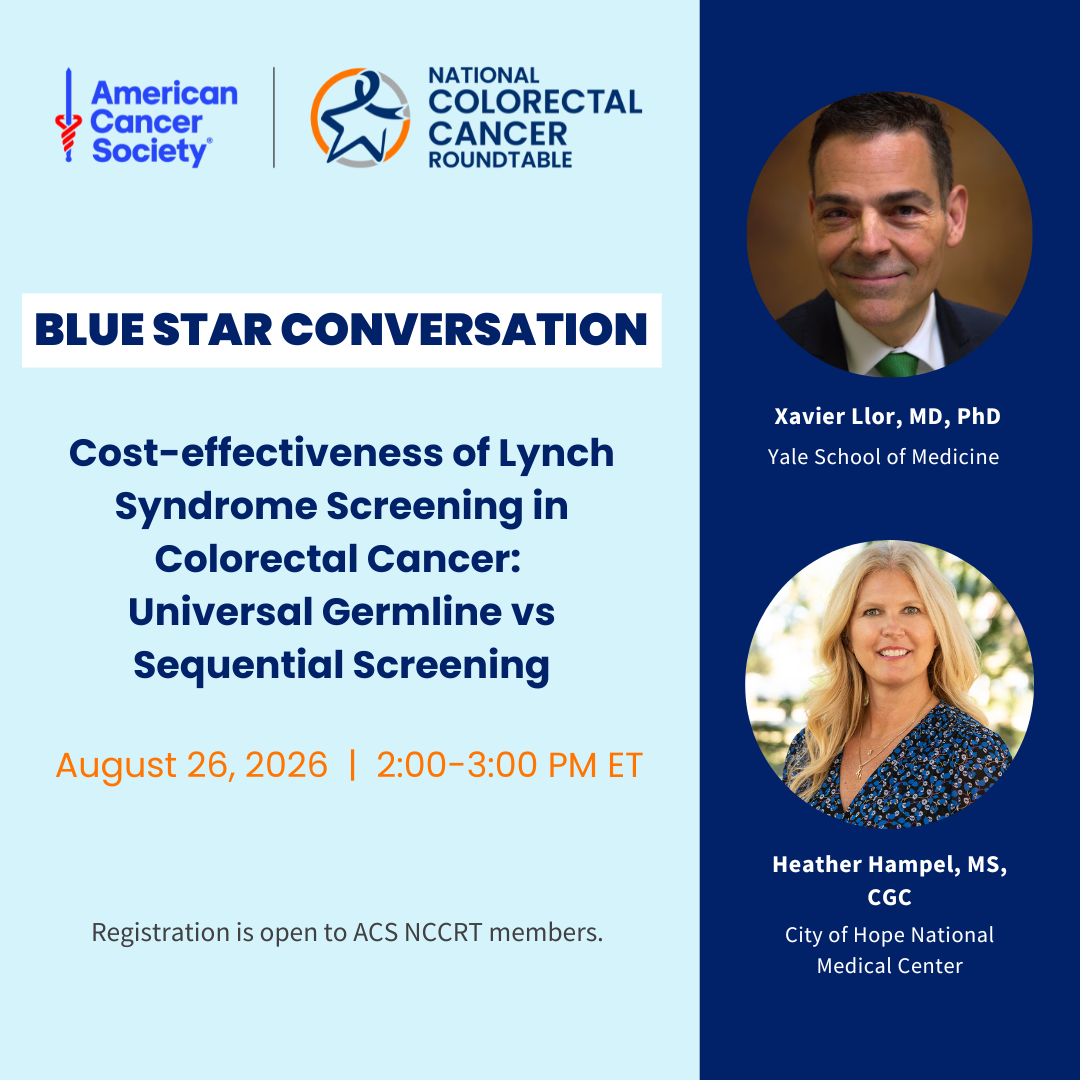
Blue Star Conversation: August 27, 2026
This Blue Star Conversation explored how expanded Lynch syndrome screening, including universal germline testing, could improve outcomes, increase testing rates, and identify more individuals with Lynch syndrome.

Webinar: Inside the New ACS Colorectal Cancer Screening Guidelines
This webinar provides an in-depth overview of the newly updated ACS CRC screening guidelines and the evidence supporting them, offering clarity on what these changes mean for screening and early detection.

Increasing Colorectal Cancer Screening in Rural Communities: A Practical Guide
This guidebook is designed to support key community partners in understanding and overcoming the unique challenges and common barriers to CRC screening faced in rural communities.