

Colorectal Cancer Trends & Health Center Insights: Working Together We Can Increase CRC Screening
This webinar focused on health centers and covered the current state of colorectal cancer, the urgent need for screening patients age 45-55, and a review of tools and resources available.
Speakers:
- Rebecca Siegel, MPH, Senior Scientific Director, Surveillance Research, American Cancer Society;
- Anay Puente, RN, Regional Charge Nurse, Family Heath Services, a 2024 ACS NCCRT National Achievement Award health center honoree;
- Keith Winfrey, MD, MPH, Chief Medical Officer, New Orleans East Louisiana Community Health Center and ACS NCCRT Steering Committee member.
Key Links:
American Cancer Society (ACS)
- Cancer Facts and Figures 2025
- Colorectal Cancer Facts and Figures 2023-2025
- Advancing Health Equity – Addressing Cancer Disparities
- Evidenced based intervention manual
- Colorectal Cancer PowerPoint Presentation
- A Clinician’s Guide to Colorectal Cancer Screening
- You Can Help Prevent Colorectal Cancer Flyer
ACS National Colorectal Cancer Roundtable
- Clinician’s Reference: Stool-Based Tests for CRC screening
- The Dos and Don’ts of Colorectal Cancer Screening
- CRC Data Dashboard
- Steps for Increasing CRC Screening Rates: A Manual for Primary Care Practices
- Lead Time Messaging Guidebook
- The ACS NCCRT Messaging and Communications Hub
Explore More
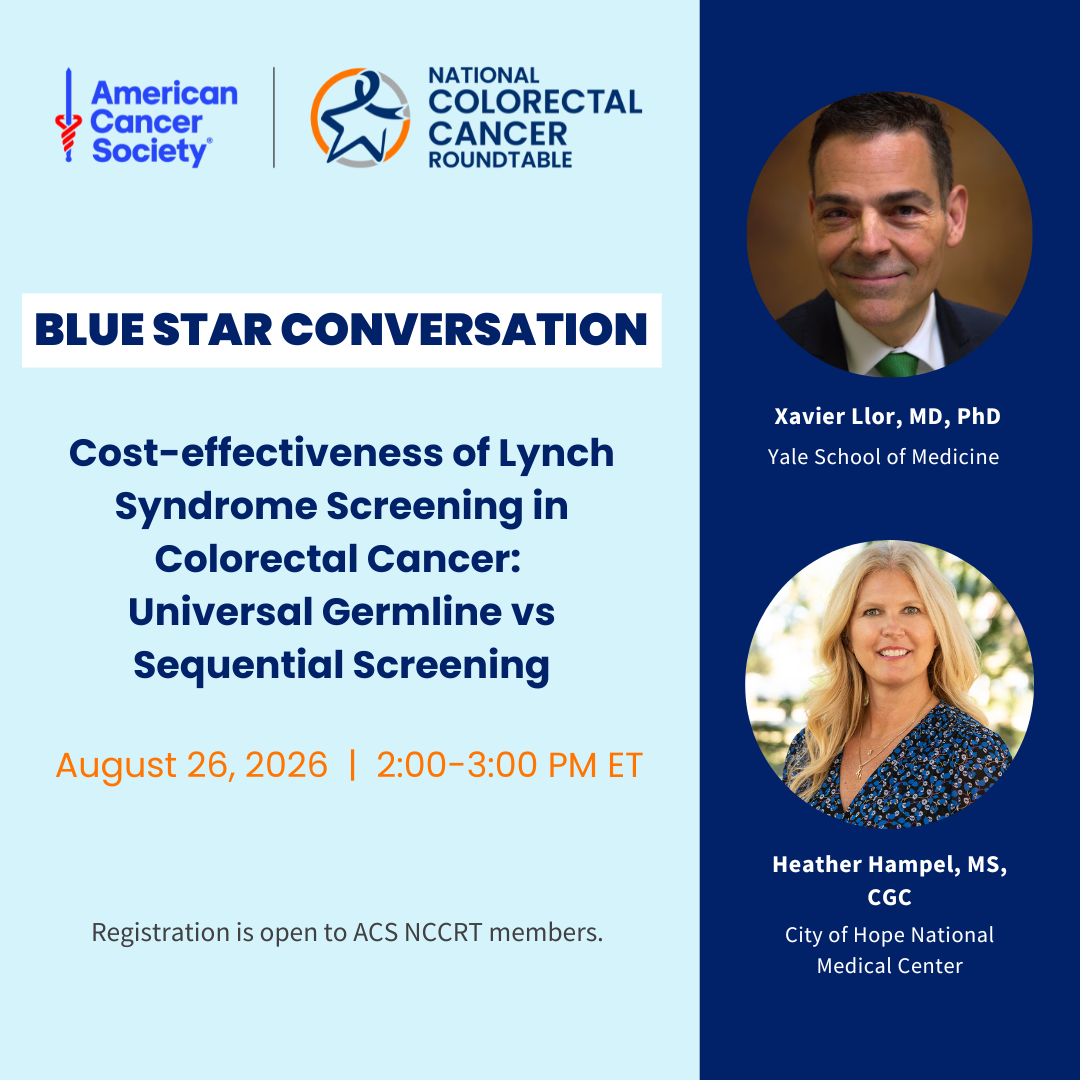
Blue Star Conversation: August 27, 2026
This Blue Star Conversation explored how expanded Lynch syndrome screening, including universal germline testing, could improve outcomes, increase testing rates, and identify more individuals with Lynch syndrome.
Webinar: Inside the New ACS Colorectal Cancer Screening Guidelines
This webinar provides an in-depth overview of the newly updated ACS CRC screening guidelines and the evidence supporting them, offering clarity on what these changes mean for screening and early detection.

Increasing Colorectal Cancer Screening in Rural Communities: A Practical Guide
This guidebook is designed to support key community partners in understanding and overcoming the unique challenges and common barriers to CRC screening faced in rural communities.