Interview with Fred Hutch/UW Medicine – 2026 National Achievement Award Honoree
Date: September 29, 2026
As part of a series, the ACS NCCRT is thrilled to highlight our 2026 National Achievement Award Winners with in depth blogs on their work. Below you’ll find an interview with one of our 2026 honorees about what they did to increase colorectal cancer screening (CRC) rates as well as their lessons learned from their efforts.
Quick Stats
Organization: Fred Hutch/UW Medicine Population Health CRC Screening Program
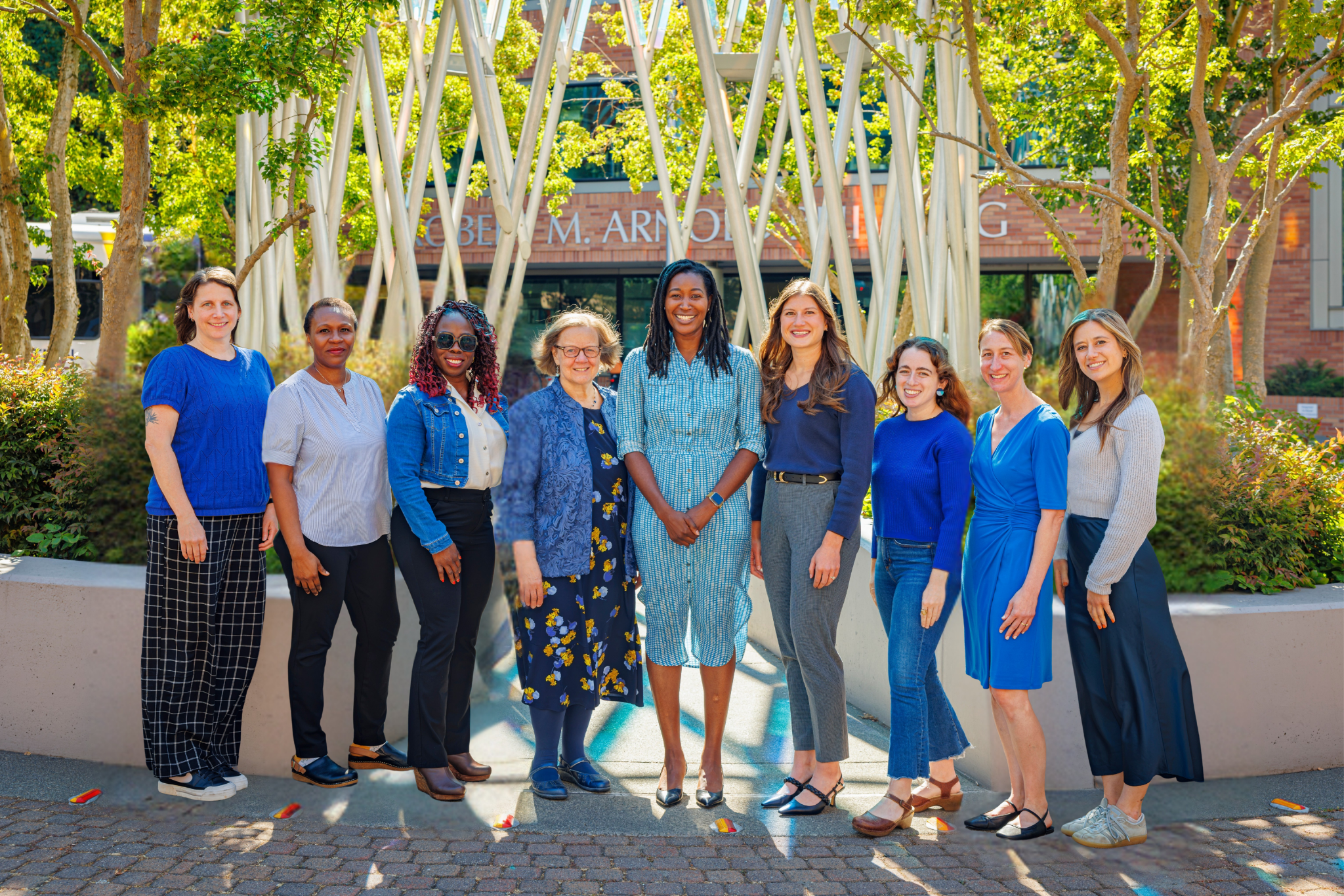
Interviewees:
- Ari Bell Brown, MPH, Collaborative Science Manager, Fred Hutch Cancer Center
- Rachel Issaka, MD, MAS, Associate Professor / Director of Colorectal Cancer Program, Fred Hutch Cancer Center
The Interview
When and why did Fred Hutch/UW Medicine decide to focus on increasing colorectal cancer (CRC) screening?
Between 2017 and 2019, we piloted a mailed fecal immunochemical test (FIT) outreach program among 50-75 year olds across our health system (UW Medicine) and increased colorectal (CRC) screening rates from 56% to 71%. However, in 2021, due to a loss of funding, COVID-19-related barriers, and updates in the age to begin screening for CRC at 45, CRC screening rates declined to 62%. That same year, motivated by the desire to prevent additional declines and with support from our institutions, we launched the Fred Hutch/UW Medicine Population Health CRC Screening Program as it exists now.
Did your program set a CRC screening goal? If so, what was it and how did you measure it? What was the final outcome?
Our goal was and has been to screen 80% of eligible adults across our healthcare system. We measure CRC screening rates across the system in partnership with our population health analytics team. As of July 2026, we have rebounded and reached a CRC screening rate of 74%.
Did you have a CRC screening champion for your efforts on staff or in the community? If so, who were they and how did you engage them?
We work in close partnership with UW Medicine’s population health and primary care teams, including primary care providers who serve as key internal champions. We engage them through targeted email outreach, staff meetings, and development of program workflows. We also identify populations with below-average CRC screening rates and partner with community representatives to develop tailored strategies to improve screening in those groups.
What interventions or activities did you use to increase CRC screening rates?
Our mailed FIT program uses a multicomponent approach to reach patients. Once we identify the eligible population, they receive an initial alert that they are due for CRC screening and what their screening options are. The alerts use a combination of electronic and manual processes. Patients always have the option to contact a person on our team if they are having symptoms that would make a colonoscopy more appropriate or if this is simply their preferred CRC screening modality. Patients who do not opt-out receive a mailed FIT that includes physical pictorial instructions as well as a QR code to a video with instructions for completion. We provide up to three reminders in various formats to encourage completion and have a navigator that works with patients to complete their FIT and follow-up colonoscopy for positive or abnormal results when needed. Our program materials have been translated into the eleven most spoken languages across our healthcare system. Our navigator communicates with patients in their preferred language with the assistance of our translation service team. We have also developed and deployed pilot programs to address barriers experienced by populations with lower CRC screening rates. Some examples include delivering FIT kits at supportive-housing sites to improve access for people experiencing homelessness and culturally responsive Epic dot phrase (which can reduce time spent on required paperwork for clinicians) paired with educational materials for Somali patients.
What do you consider your greatest success while working to increase CRC screening rates?
Our program has substantially improved follow-up colonoscopies after an abnormal FIT for patients that participate in the program. Prior to the program, 35% of patients across our healthcare system with an abnormal or positive FIT result completed a follow-up colonoscopy within 12 months. In 2024, 68% of mailed FIT program participants with an abnormal or positive result completed a follow-up colonoscopy.
This improvement reflects the combined impact of dedicated patient navigation, reminder outreach, and other targeted interventions. We’re excited to extend these findings to patients across our healthcare system and other settings.
What was your biggest lesson learned while working to increase CRC screening rates?
Increasing CRC screening requires a multimodal, coordinated effort to provide access to screening and ensure patients receive appropriate follow-up to abnormal results. Combining mailed outreach with multilingual education, reminders, strong primary care partnerships, and dedicated patient navigation has been essential for our program’s success. Ongoing data monitoring and program adaptations that are responsive to specific population barriers has also helped us close gaps in CRC screening and follow-up colonoscopy completion.

The ACS NCCRT would like to thank the Fred Hutch/UW Medicine Population Health CRC Screening Program team for their time to complete this interview. Their work to increase CRC screening rates earned them honoree status for the 2026 ACS NCCRT National Achievement Awards. Learn more about MNGI by visiting their website.