Interview with MNGI – 2026 National Achievement Award Honoree
Date: August 4, 2026
As part of a series, the ACS NCCRT is thrilled to highlight our 2026 National Achievement Award Winners with in depth blogs on their work. Below you’ll find an interview with one of our 2026 honorees about what they did to increase colorectal cancer screening (CRC) rates as well as their lessons learned from their efforts.
Quick Stats
Organization: The Links to Care Program at MNGI
Interviewees:
- Nachia Larson, B.A., Diversity, Equity and Inclusion Program Manager
- Lisa Laliberte, B.A., Director of Marketing and Communications
The Interview
When and why did MNGI decide to focus on increasing colorectal cancer (CRC) screening?
The focus on increasing CRC screening has always been a focus for MNGI, including the willingness to donate care to patients in need. The development of Links to Care (LTC) began in 2014-15 after internal conversations and the financial commitment from MNGI’s leadership to donate more colonoscopies through a more formalized program and process. Today, that focus remains a high priority and is a specific goal in MNGI’s 2024-2026 strategic plan to “Become the undisputed leaders in CRC screening, prevention, and navigation”.
Did MNGI set a CRC screening goal? If so, what was it and how did you measure it? What was the final outcome?
LTC began as a pilot program in partnership with the American Cancer Society (ACS) of Minnesota. The initial goal was to create parameters for a program that could grow over time, identify an Federally Qualified Health Center (FQHC) partner, and work collaboratively to refine the internal processes ensuring a successful and smooth process for the patient, referring provider/clinic, and MNGI. We also had a goal of making sure the patient receiving donated care was not treated any differently and had the same great patient experience as any other patient.
Once LTC was firmly established, MNGI set goals to increase the number of participating clinics and increase the number of colonoscopies from the prior year. The measurement for those goals is tracked through a dashboard that updates daily displaying specific LTC data including the number of colonoscopies completed, pathology, adenoma and cancers found.
Links to Care Clinical Data From MNGI, 2024-2026 (as of July 31, 2026)*
| Colonoscopies | Pathology | Adenoma | Cancers | |
| 2024 | 90 | 68 | 58 | 2 |
| 2025 | 153 | 122 | 94 | 3 |
| 2026* | 114 | 95 | 77 | 0 |
| Total | 357 | 285 | 229 | 5 |
Did MNGI have a CRC screening champion for your efforts on staff or in the community? If so, who were they and how did you engage them?
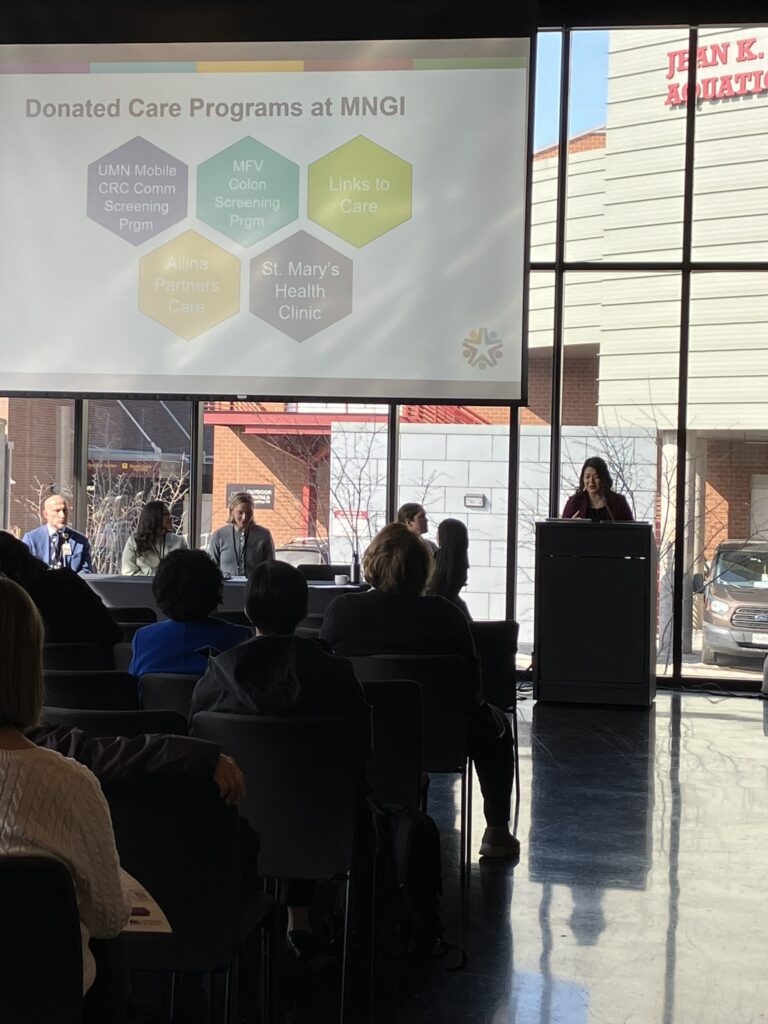
Our internal champions include Lisa Laliberte, Nachia Larson, Dr. Dambowy, and Dr. Rank. MNGI also partnered with ACS staff Minnesota as a community champion to help design the initial pilot program. Each LTC clinic also has a champion that serves as MNGI’s contact person and communicates with their own team about LTC updates.
What interventions or activities did MNGI use to increase CRC screening rates?
Our interventions and activities have focused on removing all costs for the patient and creating processes for referral and patient support. This included:
- An internal system for receiving patient referrals through a clinic/provider portal,
- Bypassing the creation of invoices for facility fees and physician fees,
- Creating and donating assembled kits with prep ingredients,
- And working with our pathology partner to forego billing for their fees.
Once scheduled, we also provide support for the individual, with access to a patient portal, appointment reminders, written and video prep instructions (also translated for non-English speaking patients) to support the prep process. We have also continued to refine the program internally. In 2024, we added family history as a qualification and then in 2026, we removed the criteria for a positive stool test and/or family history as qualifications.
Beyond that, our efforts have primarily focused on expansion to more FQHC relationships and collaborating with those partners to identify and support qualified patients. FQHCs are responsible for communicating and educating their own providers and teams about the program and processes, as well as responsibility for any initial patient education, and identifying patients in need.
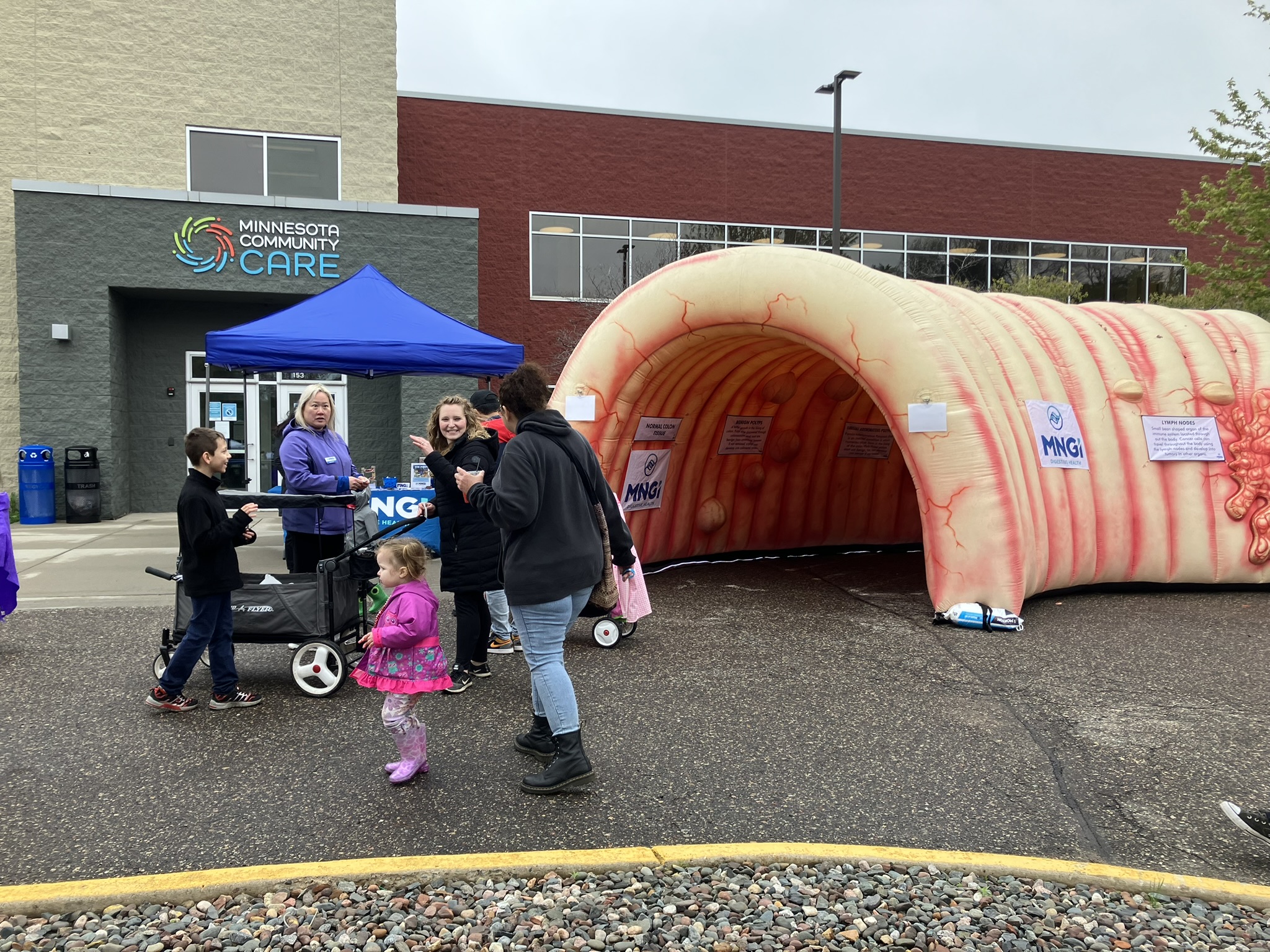
Lastly, we have actively presented information about the program to others who are working to raise awareness for CRC screening (in Minnesota and beyond), encouraging them to reach out to us for information and to model something similar within their own organizations. This includes presentations through the Minnesota Department of Health’s Sage webinars to encourage the state’s employees to direct patients to LTC partner clinics.
What does MNGI consider your greatest success while working to increase CRC screening rates?
MNGI is extremely proud that it has been able to donate more than 1,000 free colonoscopies since developing the program and growing the level of partnership to 12 different clinics throughout the Twin Cities area. In addition, we have broadened the criteria for donated care to anyone who is of screening age and uninsured.
What was MNGI’s biggest lesson learned while working to increase colorectal cancer screening rates?
When LTC expanded to additional clinics in 2024, we anticipated a significant increase in referrals and worried that demand might exceed our capacity. We learned that access is only one barrier to CRC screening and there were other barriers that prevented people from getting screened. Our commitment to increasing the number of donated colonoscopies remains strong, which is one of the reasons we eventually removed the need for a positive stool test or family history.
What else would you want others to know about how you increased CRC screening rates?
Confirm the commitment of your own organization to collaborate and increase CRC screening, then you simply need to start the conversation. That is how LTC started 11 years ago. If you are a clinic, start a conversation with your colonoscopy providers. If you are a Gastroenterology practice, start a conversation with an FQHC in your area. Once you identify a partner, be dedicated to prioritizing the patient and work through the challenges as they arise.

The ACS NCCRT would like to thank the MNGI team for their time to complete this interview. Their work to increase CRC screening rates earned them honoree status for the 2026 ACS NCCRT National Achievement Awards. Learn more about MNGI by visiting their website.