
Colorectal Cancer Screening Best Practices For Hospitals And Health Systems Webinar – July 18, 2018
Disclaimer: The contents of this resource may not reflect the ACS Colorectal Cancer Screening Guidelines, updated May 27, 2026.

Colorectal Cancer Screening Best Practices For Hospitals And Health Systems – July 18, 2018
This webinar hosted on Wednesday, July 18 announced the release of the Colorectal Cancer Screening Best Practices Handbook for Hospitals and Health Systems. The purpose of the webinar was to familiarize participants with the new handbook, review critical steps for hospitals and health systems to take in advancing colorectal cancer screening efforts, and learn from two health system leaders about their experiences implementing colorectal cancer screening interventions, as featured in the handbook. This webinar was patterned after a workshop on the topic featured at the 2017 NCCRT Annual Meeting.
Speakers include:
- Mary Doroshenk, Director, NCCRT
- Andrew Albert, MD, MPH, Advocate Illinois Masonic Medical Center
- Amanda Bohleber, MD, Medical Director, Deaconess Clinic
The webinar was moderated by the Co-Chairs of the NCCRT Professional Education and Practice Implementation Task Group, Michael Potter, MD, University of California, San Francisco and Dorothy Lane, MD, MPH, American College of Preventive Medicine.
Explore More
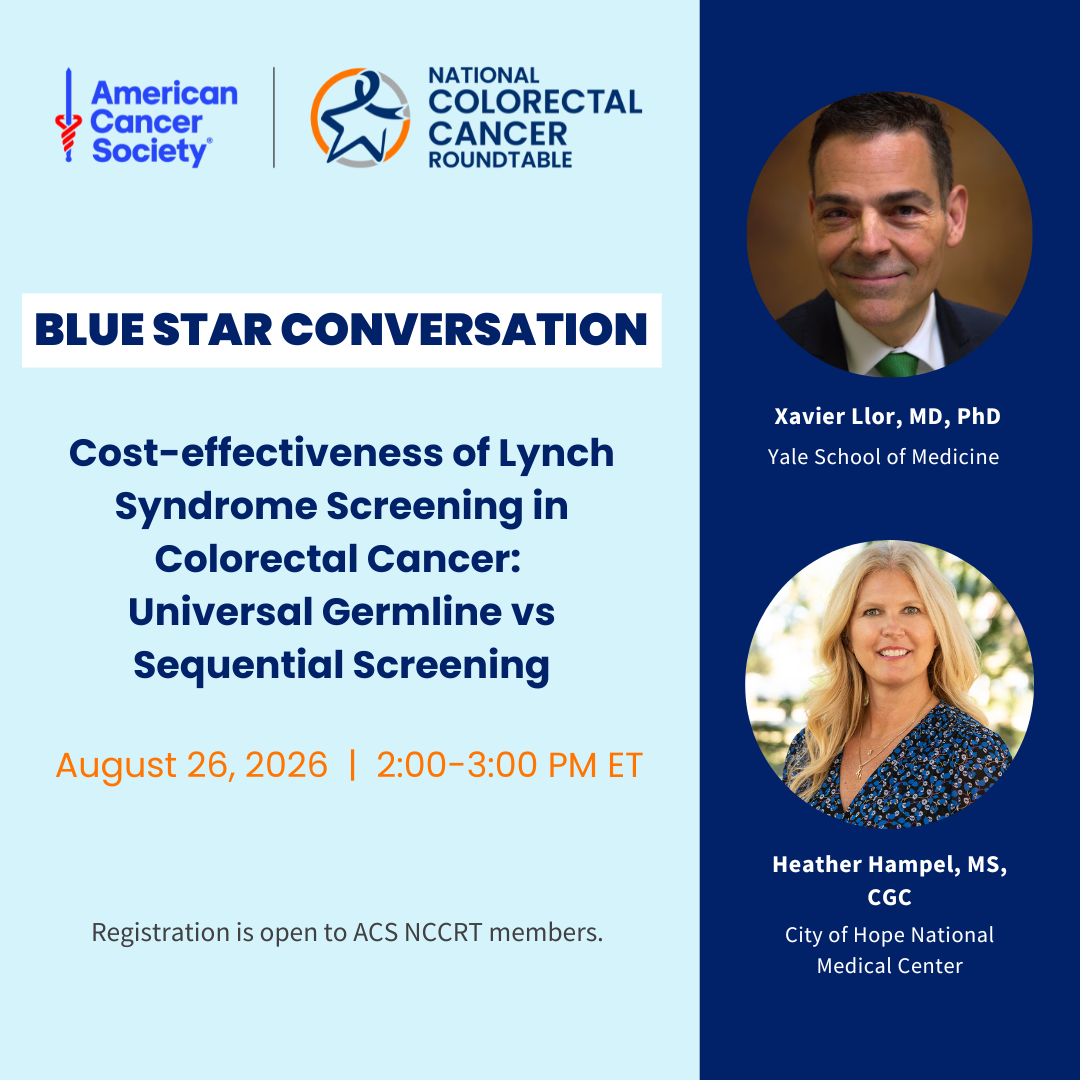
Blue Star Conversation: August 27, 2026
This Blue Star Conversation explored how expanded Lynch syndrome screening, including universal germline testing, could improve outcomes, increase testing rates, and identify more individuals with Lynch syndrome.

Webinar: Inside the New ACS Colorectal Cancer Screening Guidelines
This webinar provides an in-depth overview of the newly updated ACS CRC screening guidelines and the evidence supporting them, offering clarity on what these changes mean for screening and early detection.

Increasing Colorectal Cancer Screening in Rural Communities: A Practical Guide
This guidebook is designed to support key community partners in understanding and overcoming the unique challenges and common barriers to CRC screening faced in rural communities.